
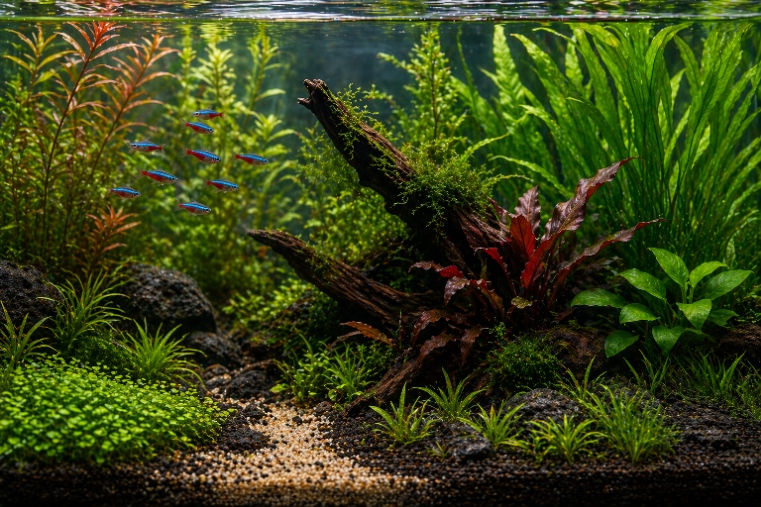
Most planted-tank algae problems come from inconsistency rather than one single mistake. A repeatable weekly routine works better than aggressive short-term fixes like blackouts or chemical treatments.
This guide provides a sustainable, easy-to-follow algae control routine that scales from small nanos to large display tanks.
Why Inconsistency Causes Algae (Not Just "Too Much Light")
Algae is not a moral failure. It is a biological response to unstable conditions.
| Unstable Practice | What Algae Does |
|---|---|
| Changing photoperiod randomly | Algae adapts faster than plants |
| Skipping fertiliser then overdosing | Nutrient spikes favour algae |
| Irregular water changes | Waste buildup triggers blooms |
| Ignoring dead leaves | Decomposition releases ammonia (algae fuel) |
The fix: A boring, repeatable weekly routine. Plants love predictability. Algae hates it.
Weekly Algae Control Routine (That Scales)
| Day | Task | Why It Matters |
|---|---|---|
| Daily | Run fixed photoperiod (6–8 hours). No random extra light. | Plants need consistency. Extra light without extra CO2/nutrients = algae. |
| Daily (optional) | Spot-clean visible algae with toothbrush or cloth. | Prevents spread. Small daily effort beats weekly deep clean. |
| Weekly (same day) | 30–50% water change. Manual algae removal (glass, hardscape, leaves). | Removes spores and waste. Manual removal is instant export. |
| Weekly | Trim shaded or melting leaves before they decompose. | Decaying organics release ammonia and phosphates. |
| Weekly | Dose fertilisers in small, even intervals (e.g., 3x per week instead of 1 big dose). | Prevents nutrient spikes. Stable levels favour plants over algae. |
| Monthly | Clean filter and check flow. Replace any clogged sponges/pads. | Dead spots with low flow = algae hotspots. |
The golden rule: Do your water change and manual removal in the same session. Export what you disturb.
Balance Light, Nutrients, and Flow
Algae almost always wins when these three elements are out of balance.
| Element | Sign of Imbalance | How to Fix |
|---|---|---|
| Light | Algae grows faster than plants. Green dust on glass within 24 hours. | Reduce intensity (dimming) or duration (6 hours instead of 8). Change one thing at a time. |
| Nutrients | Green spot algae (low phosphate) or green hair algae (excess iron/light). | Dose consistently. Don't skip weeks then overdose. Use all-in-one fertiliser or test regularly. |
| CO2 (if injected) | Staghorn or BBA (black beard algae) on leaf edges and filter outlets. | Check CO2 drop checker (lime green at lights-on). Improve distribution with smaller bubbles or better flow. |
| Flow | Algae patches in corners, behind hardscape, or on slow-moving stems. | Add a small circulation pump. Redirect filter outlet. Dead spots are algae nurseries. |
High light warning: High light without stable CO2 or nutrient dosing almost always favours algae. If algae accelerates, reduce intensity or duration first, then stabilise everything else before making further changes.
What to Avoid (Common Traps)
| Trap | Why It Fails |
|---|---|
| Repeated full blackouts | Symptoms disappear briefly, but the underlying imbalance remains. Algae returns within days. |
| "Catch-up" fertiliser dosing | Skipping for 2 weeks then dumping a double dose causes a nutrient spike – algae loves this. |
| Adding more fish to "eat algae" | Most algae eaters produce more waste than algae they consume. Cleanup crew supports, not replaces, good maintenance. |
| Liquid carbon as a permanent fix | Glutaraldehyde (liquid carbon) can damage certain plants (vals, mosses) and is a temporary suppressant, not a solution. |
| Changing three variables at once | You'll never know what actually fixed (or worsened) the problem. Change one thing, observe for 1–2 weeks. |
How to Recover from an Algae Bloom (Step by Step)
If algae is already out of control, follow this rescue protocol before switching to the weekly routine:
| Phase | Action | Duration |
|---|---|---|
| 1. Manual removal | Remove as much algae as possible by hand. Toothbrush for hair algae, razor for glass, trim badly affected leaves. | Day 1 |
| 2. Big water change | 50–70% water change. Vacuum substrate thoroughly. Clean filter (in removed tank water, not tap water). | Day 1 |
| 3. Shorten photoperiod | Reduce light to 6 hours maximum. Do not increase until algae stops spreading. | Days 1–14 |
| 4. Consistent dosing | Resume small, regular fertiliser doses. Do not stop completely – starving plants makes algae worse. | Ongoing |
| 5. Observe and adjust | If no improvement after 10–14 days, reduce light intensity or improve flow. | Weekly review |
Patience warning: Algae won't vanish overnight. Healthy plant growth outcompetes algae slowly. Expect 2–4 weeks to see clear improvement.
Sustainable Routine Summary Table
| Frequency | Action | Time Needed |
|---|---|---|
| Daily | Fixed photoperiod (6–8 hours) | Set and forget |
| Daily | Spot-clean visible algae | 2–5 minutes |
| Weekly | Water change (30–50%) + manual removal + trim dead leaves | 30–60 minutes |
| Weekly | Small fertiliser doses (split into 2–3 applications) | 2 minutes |
| Monthly | Filter clean + flow check | 15 minutes |
| Seasonally | Review light intensity, plant mass, and fish stocking | 30 minutes |
Final Thoughts
The most effective algae control routine is the one you can actually stick to. A simple, repeatable weekly schedule beats a complex, perfect-on-paper system that you abandon after three weeks.
Start small: Fix your photoperiod this week. Add a consistent water change day next week. Adjust fertilisers the week after. Small, permanent changes win the long game.